
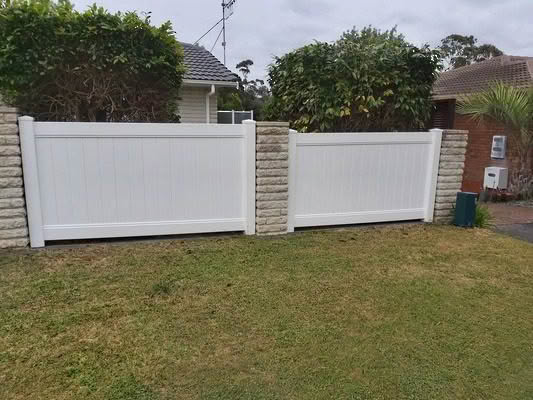
When most Kiwi homeowners start researching fencing, the first thing they look at is the upfront price per linear metre. Timber looks cheaper on paper — and sometimes it is, at first glance. But when you factor in painting, maintenance, repairs, and the likelihood of replacing the whole fence within 15–20 years, the numbers tell a very different story.
At Durafence, we get asked all the time: ‘Is PVC fencing worth the extra cost?’ The short answer is yes — and in many cases, PVC actually works out cheaper over the lifetime of your fence. Here’s why.
The upfront cost comparison
Let’s start with what most people want to know first — how much does it cost per linear metre, installed and including GST?
| Fence Type | Cost per LM (installed, incl. GST) | Painting Required? |
|---|---|---|
| Basic rough-sawn timber | ~$180 | Yes — ongoing cost |
| PVC privacy fence (Durafence) | ~$230 | Never |
| Dressed timber (to match PVC look) | $400 – $500 | Yes — and still won’t match |
At first glance, timber at $180/LM looks like the obvious winner. But that figure is for a basic rough-sawn fence — the kind that needs painting before it even starts to look good, and repainting every 5–7 years to stay that way.
If you want timber fencing that actually looks as clean and sharp as PVC — using tongue and groove dressed timber with quality paint — you’re looking at $400 to $500 per linear metre installed. That’s more than double the cost of Durafence PVC, before you’ve even thought about maintenance.
A Durafence PVC privacy fence installed at approximately $230 per linear metre (incl. GST) will look better on day one — and still look the same on day 3,650, without a single coat of paint.
The hidden cost of timber: painting
Painting is the cost most people forget to include when comparing fencing options — and it adds up fast.
A standard exterior paint job on a timber fence costs between $30 and $50 per linear metre, depending on condition, height, and access. That’s just for labour and paint — it doesn’t include any prep work, rotted board replacements, or re-nailing that typically comes with a repaint.
Over the lifetime of a timber fence, you can expect to repaint at least three or four times. That’s an additional $90–$200 per linear metre on top of your original installation cost — costs that simply do not exist with PVC.
PVC fencing never needs painting. Ever. The colour is moulded through the full thickness of the material, so it doesn’t fade, peel, or chip. To keep it looking new, all it needs is an occasional wash with a hose or a soft brush and mild detergent.
The 20-year cost: where PVC really wins
Here’s the comparison that matters most — what does each option actually cost over 20 years? We’ve modelled this across a standard 10-metre fence run:
| Timber fence | Dressed timber | PVC (Durafence) | |
|---|---|---|---|
| Installation (per 10m) | $1,800 | $4,000–$5,000 | $2,300 |
| Painting (initial + 3 repaints) | $1,200–$2,000 | $1,500–$2,500 | $0 |
| Repairs & maintenance (20 yrs) | $800–$1,500 | $800–$1,500 | ~$100 |
| Replacement needed at 15–20 yrs? | Likely | Possibly | No |
| Estimated 20-year total (per 10m) | $3,800–$5,300 | $6,300–$9,000 | ~$2,400 |
Over two decades, a basic timber fence can cost between $3,800 and $5,300 per 10 metres — and that’s assuming it holds up. Many timber fences in New Zealand need partial replacement within 15 years due to rotting posts, boards, and rails, particularly in wetter regions.
A dressed timber fence built to look like PVC? You could be spending up to $9,000 per 10 metres over 20 years — for a result that still won’t match the clean, consistent finish of genuine PVC.
A Durafence PVC fence installed today will cost around $2,400 per 10 metres over that same 20-year period — with minimal maintenance and no repainting required.
PVC fencing is not just the low-maintenance choice — for most homeowners, it’s the most cost-effective choice over the full life of the fence.
Why PVC lasts longer in the New Zealand climate
New Zealand’s climate is tough on outdoor timber. UV exposure bleaches and dries it out. Moisture from rain and morning dew causes swelling, warping, and rot. Wind and movement over time loosen nails and shift boards.
PVC is chemically inert — it doesn’t absorb moisture, doesn’t rot, and doesn’t warp or split. Durafence PVC panels are UV-stabilised, meaning the brilliant white finish holds up even through our high-UV summers without yellowing or becoming brittle.
Our fencing is designed and tested for New Zealand conditions and comes with a product warranty that timber simply can’t match. When we say 20+ years, we mean it.
What about the appearance?
One of the most common questions we hear is: ‘Does PVC look as good as timber?’ The honest answer is that modern PVC fencing doesn’t just match timber — it outperforms it.
⦁ PVC panels look great on both sides, so your fence looks as good from the street as it does from your garden.
⦁ No visible nail heads, no gaps from warping boards, no uneven surfaces from knots in the timber.
⦁ The finish stays consistent year after year — no weathering, no staining, no paint peel.
⦁ Durafence panels are available in a clean, contemporary profile that suits everything from modern new builds to classic Kiwi homes.
If you’ve ever admired a freshly painted timber fence — come back and look at it five years later. Then compare it to a PVC fence installed at the same time. The difference is striking.
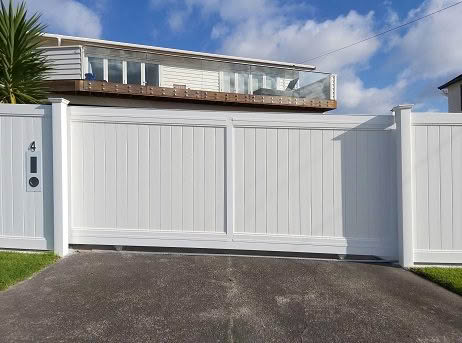
PVC = Never Needs Painting
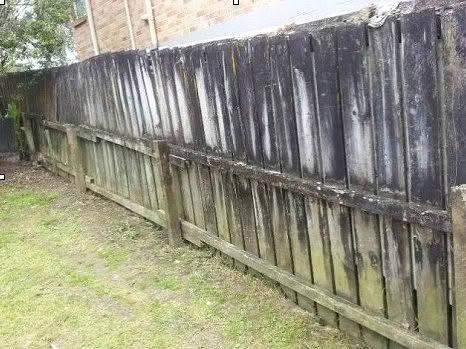
Wooden Fences = Painting
PVC fence maintenance: what’s actually involved?
We’ll keep this short, because there really isn’t much to say. To maintain a Durafence PVC fence:
⦁ Hose it down once or twice a year to remove dust and general grime.
⦁ For tougher marks — bird droppings, mould in shaded spots — a soft brush with mild soapy water does the job.
⦁ That’s it.
No sanding. No priming. No painting. No annual inspection for rotting boards. No replacing posts that have shifted. Just an occasional wash, and your fence looks as good as the day it was installed.
Is PVC fencing right for your property?
PVC privacy fencing is a great fit for most residential properties in New Zealand — especially if you’re looking for a long-term, low-maintenance solution. It’s particularly well-suited to:
⦁ Boundary fencing between properties where a clean, private look matters.
⦁ Pool fencing where moisture resistance is critical.
⦁ Coastal or high-UV areas where timber deteriorates faster than average.
⦁ Rental properties or investment homes where minimising ongoing maintenance costs is a priority.
⦁ Homeowners who simply don’t want to spend their weekends maintaining their fence.